August 14, 2026 · 10 min
A menu is a sales document that happens to list food. The best menu ideas aren't exotic dishes — they're structural: what you offer, how few things you offer, where items sit on the page, and how each one is priced against its plate cost. Here's the playbook, with ideas you can steal by category.
Structure beats novelty
- Small menus win: 20–30 items executed perfectly beat 60 executed adequately — less waste, faster tickets, tighter inventory, easier training.
- One signature per section: a dish people photograph and drive across town for anchors the whole category around it.
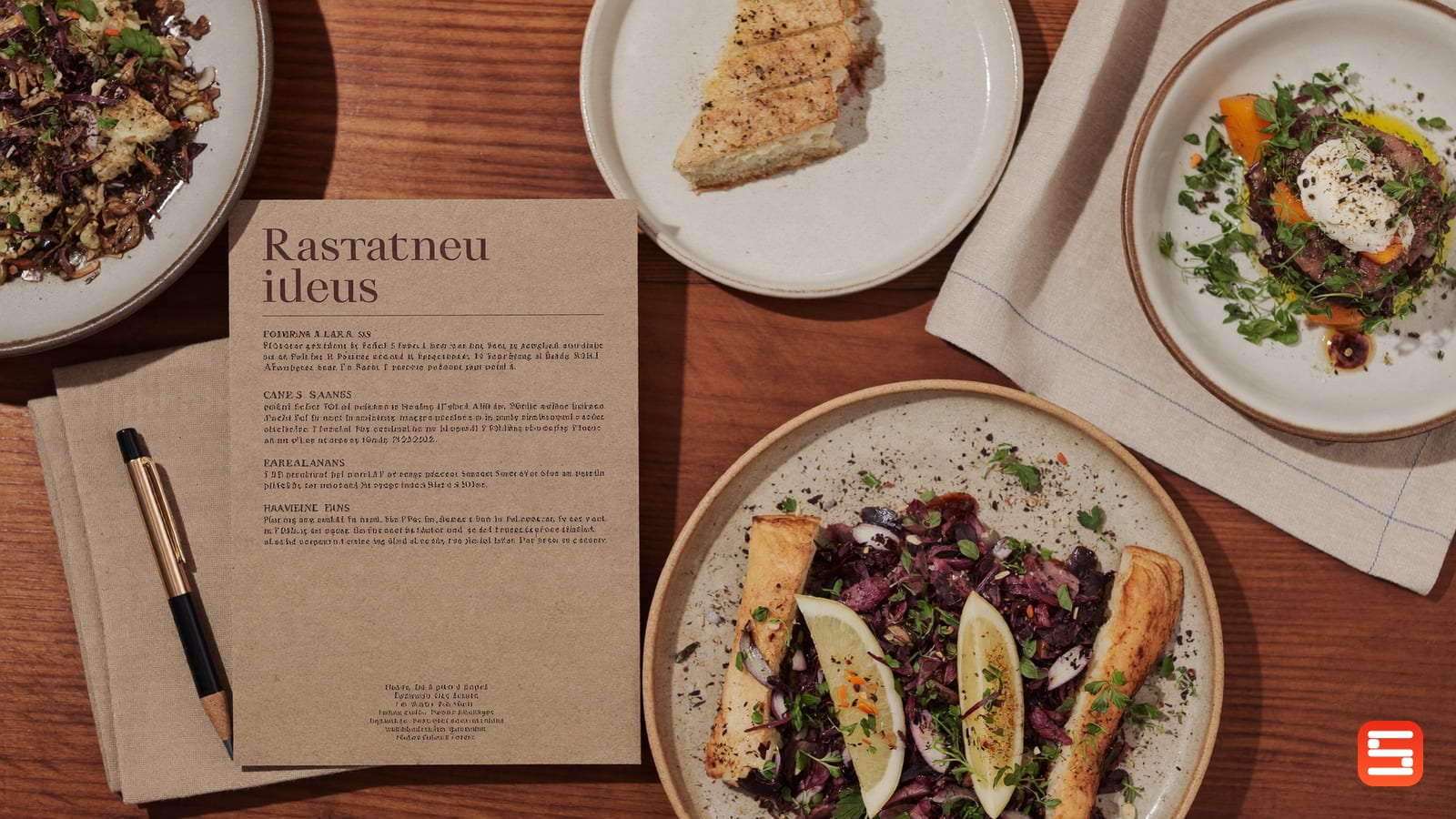
- The golden triangle: eyes hit the middle, then top right, then top left of a menu — put your highest-margin items there, not your cheapest.
- Kill the dollar signs: menus that write '18' instead of '$18.00' consistently see higher average checks.
- Describe with origin and technique ('48-hour braised', 'from Baer's farm') — provenance raises perceived value more than adjectives.
High-margin ideas worth adding in 2026
- Smash burgers and fried chicken sandwiches — beloved, cheap to plate, travel well for delivery.
- Rice and noodle bowls — one prep line, endless variations, 20–25% food cost.
- Flatbreads and filled breads — dough is pennies; toppings are the story.
- Zero-proof cocktails and house sodas — beverage margins without the liquor license.
- Family bundles for pickup — one ticket, $60+ check, built for your direct ordering channel.
- Weekend-only specials — scarcity that fills your slowest daypart and feeds your social feed.
Cover the table's veto votes
Groups choose restaurants by veto: one vegan, one gluten-free, or one picky eater redirects the whole party. You don't need a separate menu — you need one genuinely good option per veto category, marked clearly. A vegetable dish with the same care as the signature protein converts entire tables, not just one seat.
Price it like you mean it
Every idea above lives or dies on plate cost. Cost each recipe ingredient by ingredient, price to your target food cost percentage, then round with intent — charm prices ($15.95) for casual, whole numbers for upscale. Our free food cost calculator and menu pricing calculator do the math; menu engineering is deciding what deserves the golden triangle once you know each item's real margin.
Then re-cost quarterly. Supplier prices drift a few points a year, and a menu that was profitable in January quietly isn't by October. The restaurants that keep margins don't have better ideas — they have current numbers.