Updated October 2, 2026 · 12 min
Commission-free online ordering means the platform doesn't take a percentage of each order. That's the headline. What matters is what you pay instead: a monthly fee, a flat fee per order, card processing, or a fee added to the guest's bill. This guide breaks down the models, runs the math against marketplace commissions, and shows how to move your regulars to ordering direct.
What commission-free online ordering means
A commission is a percentage of each order. Marketplaces charge it on every order they handle; DoorDash, for example, charges 15% to 30% on delivery orders and 6% on pickup. A commission-free online ordering system doesn't take that percentage. You still pay card processing, because every card payment costs something, and some "commission-free" systems add other per-order charges.
With Servestack, there's no commission on any plan. You pay a flat monthly plan ($179 on Starter, $499 on Scale), and the only per-order cost is card processing through Stripe.
The four ways ordering systems charge
| Model | Examples | What you pay per order |
|---|---|---|
| Marketplace commission | DoorDash 15–30% delivery, 6% pickup; Uber Eats 20–30%; Grubhub 5–20% marketing commission | A percentage of every order |
| Percentage on your own site | Owner.com Flexible: $249/month + 5% restaurant fee, and guests pay a 5% order support fee | A percentage, plus a fee on the guest |
| Flat fee per order | Popmenu: $1.00 per online order; Slice: $2–$3 per order over $10 | A fixed amount per order |
| Flat monthly fee | Servestack $179 or $499; Menufy $149–$179; ChowNow from $229 | Card processing only (setup fees vary by company) |
The math: commission vs. commission-free
Take a restaurant doing $20,000 a month in online orders at a $30 average ticket, about 667 orders. Before card processing, which applies to every direct option, here's the monthly cost of each model:
| Model | Monthly cost on $20,000 of orders |
|---|---|
| 30% marketplace commission | $6,000 |
| 15% marketplace commission | $3,000 |
| 5% per-order fee | $1,000 |
| $2 per order | about $1,334 |
| $1 per order | about $667 |
| Servestack Starter, flat | $179 |
The difference compounds: a 15% commission on $20,000 a month is $36,000 a year that a flat plan keeps in the restaurant.
Is a free online ordering system really free?
Some systems are free to start. Square for Restaurants has a $0 plan with a branded ordering page; online orders pay 3.3% + 30¢ in card processing on that plan. Clover's online ordering page has no setup or subscription fee, but it requires Clover POS hardware. GloriaFood offered a free ordering widget, but it reaches end of life on April 30, 2027.
Free plans can be the right start for a small menu. Check what's tied to them: the POS you have to use, the card rate, whether marketing and loyalty cost extra, and whether you can take your guest list with you.
How to move regulars to direct online ordering
- Launch your own ordering siteOrdering on your domain, synced to your POS, with the same menu and prices as in the restaurant.
- Point Google at itSet the order button on your Google Business Profile to your own site, not a marketplace.
- Put it in every bagA flyer or card in marketplace orders: order direct next time, with a first-order reward.
- Add it to tables and the counterA QR code on table tents and the register for pickup orders.
- Capture and follow upEvery direct order adds a guest to your list; welcome and win-back emails bring them back.
- Keep marketplaces for discoveryStay listed so new guests find you, and let your direct channel keep them.
What a commission-free ordering site looks like
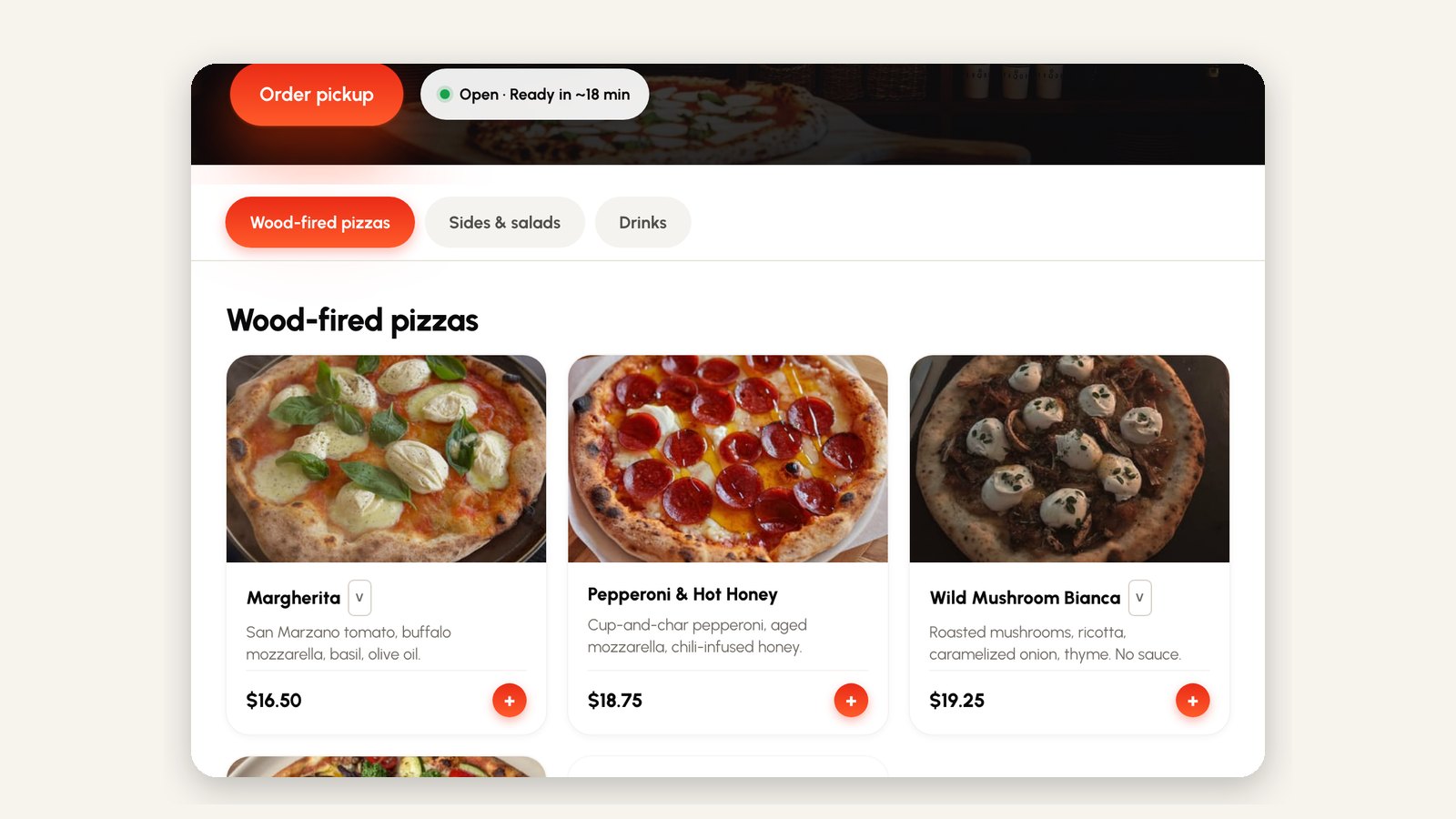
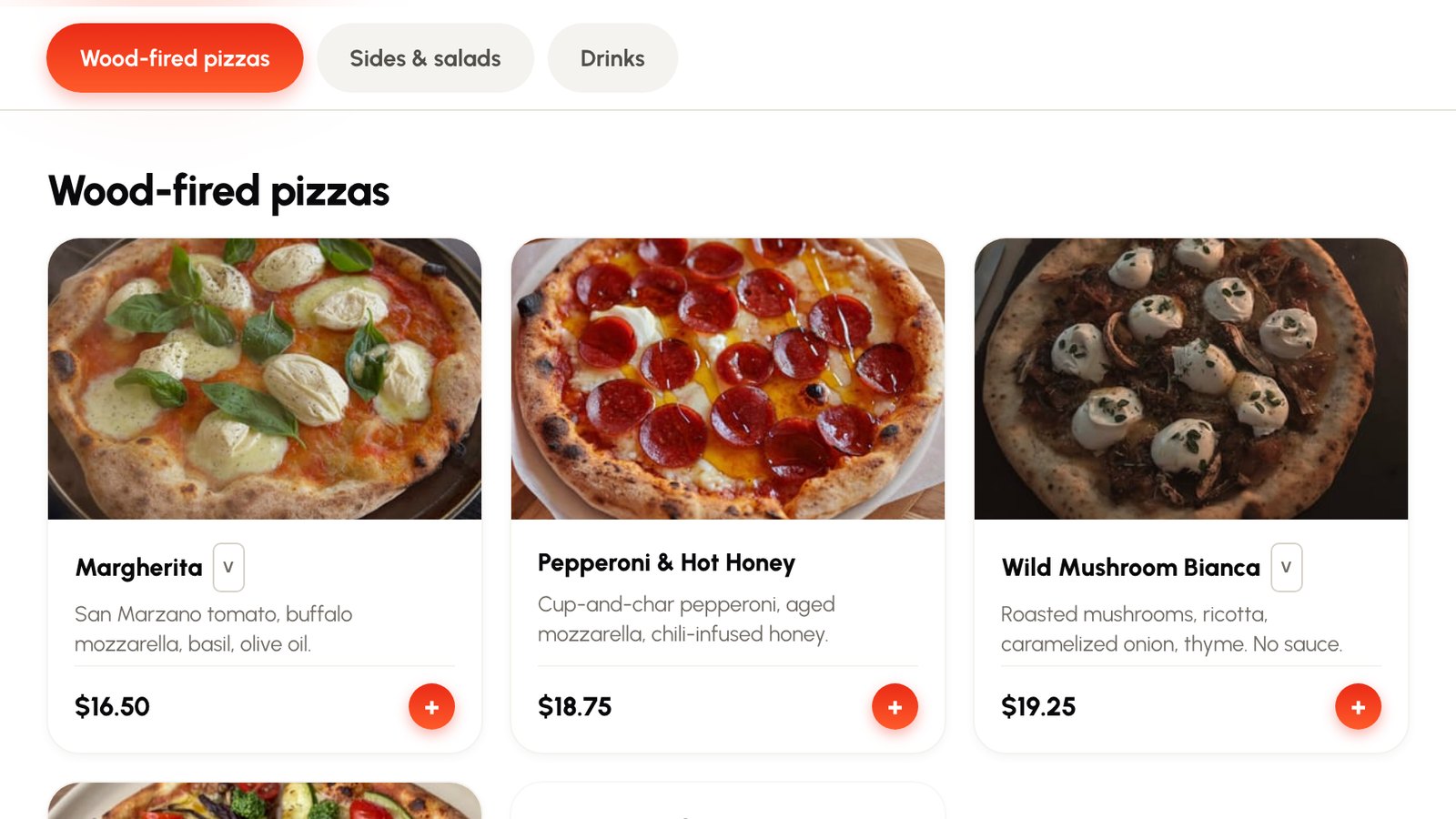
The image at the top of this guide is the Servestack demo storefront for Flour & Flame, a fictional Boston pizzeria: the menu is the ordering page, every dish has a photo, a price and an add button, and checkout happens on the restaurant's own domain. You can order from it at servestack.ai/demo-restaurant, no signup, no payment.
That's the whole idea of commission-free online ordering: the guest orders from you, the order goes to your POS, and the guest's details stay with you for the next order.